How do you train a new expediter in two weeks without wrecking a single service?
Expo is the hardest seat to fill and the easiest to fail at. Here is a two-week plan that builds reading, calling, and pacing in the right order.
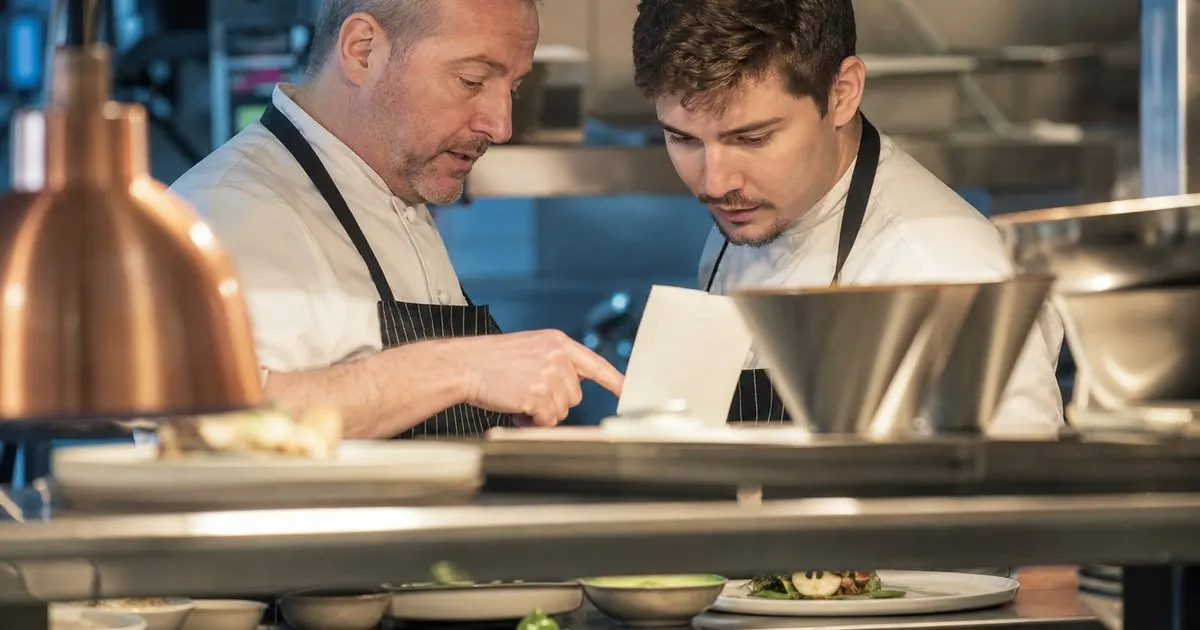
Teach the seat in layers, not all at once
The expo job is really four jobs stacked on top of each other: reading tickets and knowing where each item lives, calling fires and all days clearly, checking plates before they leave, and pacing tables so they land together. A new expo who is asked to do all four on night one will do none of them well and will decide the seat is impossible. The two-week plan works because it adds one layer at a time, with the trainee doing the current layer while a senior expo does the rest, and only advancing when the current layer is clean.
Days one through three are reading only. The trainee stands at the pass, reads every ticket as it prints, and says to the trainer where each item is going and what the slow item is. No calls, no plate checks. This sounds slow, and it is the step most kitchens skip, which is why their new expos freeze at the pass: they are trying to call fires for a menu they cannot yet read at speed. By day three the trainee should be able to look at a ticket and name the slowest station without thinking.
Keep reading: How do you route kitchen tickets to the right stations without chaos?, What is the best way to pace courses so a table eats together?, Why does the expo pass fall apart during a busy dinner rush?. See how PlatePassr helps you kitchen expo ticket routing and course pacing.
Add calling, then plate checks
Days four through six, the trainee calls the fires and all days while the senior expo stands beside them and handles pacing decisions, plate checks, and anything that goes wrong. The trainer says which ticket to fire and when, and the trainee makes the call in the house structure: type, quantity, item, modifier, table. The trainer corrects the structure, not the timing. The goal of this stage is a trainee whose calls the line hears and repeats back without asking for clarification. If the cooks are asking what was said, the calls are not clean yet, and the trainee stays here. Related: How do you route kitchen tickets to the right stations without chaos?
Days seven through nine add plate checks. The trainee now reads each plate against the ticket before it leaves, catches missing components and wrong modifiers, and calls hands. The senior expo is still making the fire timing decisions but is stepping back physically, a few feet from the pass. This is usually the stage where the trainee starts to feel the rhythm, because they are now touching every ticket twice, at the print and at the window, and the shape of a table becomes visible to them. Related: When should the expediter fire the entrees for a large party?
Pacing last, on slower services first
Pacing is the layer that separates an expo from a caller. Days ten through twelve, the trainee makes the fire timing decisions on a slower service, with the trainer beside them asking why now for each fire. The answer should be in terms of station lead times: grill is at nine, sauté is at five, so grill fires now and sauté fires in four. If the trainee cannot say why, the trainer supplies the reasoning and the trainee tries the next table. This is where measured lead times matter, because a trainee can learn a number in a day but cannot learn a feel in a week. Related: What is the best way to pace courses so a table eats together?
Days thirteen and fourteen, the trainee runs a real service with the trainer in the kitchen but not at the pass. The trainer intervenes only if a table is about to go badly wrong, and debriefs afterward using the actual tickets: which tables landed together, which did not, and what the fire decision was on each one that did not. If your display records fire and bump times, that debrief takes ten minutes and is precise. If it does not, keep the ticket stack and go through it. Either way, the debrief is where the second week of learning happens.
What makes the plan fail, and how to protect it
The plan fails when the trainer is also the chef and gets pulled off the pass to cook, leaving the trainee alone at layer two on a Friday. It fails when the kitchen has no agreed call structure, so the trainee is learning one senior expo's personal style that the line half-ignores. And it fails when the trainee is thrown into pacing on day two because someone called out. Protect the plan by scheduling training on services that can absorb a slow pass, by writing the call structure down before training starts, and by keeping the senior expo physically at the pass through day nine even if it costs a cook on the line.
The honest timeline is that a trainee can be safe on the pass in two weeks and good at it in a few months. Two weeks buys you an expo who reads accurately, calls cleanly, checks plates, and can pace a normal service using measured numbers. What comes later is the judgment for the abnormal service: the lost ticket, the station that goes down, the twelve-top that walks in at eight forty-five. Give the new expo the numbers, the structure, and the debriefs, and that judgment develops. Give them a headset and a printer on night one, and it usually does not. Related: Why does the expo pass fall apart during a busy dinner rush?
- Split the job into reading, calling, plate checks, and pacing, and train them in that order.
- Do not let the trainee call fires until they can read every ticket and name the slow station instantly.
- Teach pacing with measured station lead times so the trainee learns a number, not a feel.
- Protect the plan: keep the senior expo at the pass through plate checks and debrief every service with real tickets.

Julien Jimenez
Julien Jimenez is an independent software builder based in Paris. He designs, ships, and operates focused SaaS products for small businesses and independent professionals. Read the full author page.
Send Every Ticket to the Right Station
Kitchen expo ticket routing and course pacing. PlatePassr is built to help you put this into practice.
Start free trialMore from the PlatePassr blog
How do you route kitchen tickets to the right stations without chaos?
What is the best way to pace courses so a table eats together?
Why does the expo pass fall apart during a busy dinner rush?
Get the PlatePassr playbook
Practical guides on kitchen expo and service, straight to your inbox as we publish them. No spam, unsubscribe any time.