What should a chef do when takeout and delivery tickets flood the line mid-service?
Off-premise orders arrive with no host, no pacing, and no patience. Here is how to route, sequence, and cap them so they stop wrecking the dining room.
Why off-premise tickets hurt more than their volume suggests
A dine-in ticket arrives through a host stand and a server who can see the kitchen is busy. A takeout or delivery ticket arrives whenever a customer taps a button, in bursts that have nothing to do with the dining room. Those tickets also tend to skip courses: no appetizer to buy the kitchen time, just entrees that all fire at once. And they carry a hard deadline in the form of a driver or a customer at the counter, which makes them feel urgent in a way a dine-in table does not. The result is a line that was pacing four tables and now has six tickets that all want to be first. Related: What is the best way to pace courses so a table eats together?
The damage compounds because off-premise orders often land disproportionately on one or two stations. Wings, tenders, fries, sandwiches, and bowls sell well off-premise (fried items are popular on delivery even though they travel badly), so delivery menus lean on fry and garde manger. During a dinner rush, that means the fry station gets slammed by orders the expo did not pace while the grill is fine. The dining room tables then wait on their fries while the delivery bags go out on time, and the guests who are physically present get the worst experience. That is backwards, and it is fixable. Related: Why does the expo pass fall apart during a busy dinner rush?
Keep reading: How do you route kitchen tickets to the right stations without chaos?, What is the best way to pace courses so a table eats together?, Why does the expo pass fall apart during a busy dinner rush?. See how PlatePassr helps you kitchen expo ticket routing and course pacing.
Route off-premise tickets to a separate lane
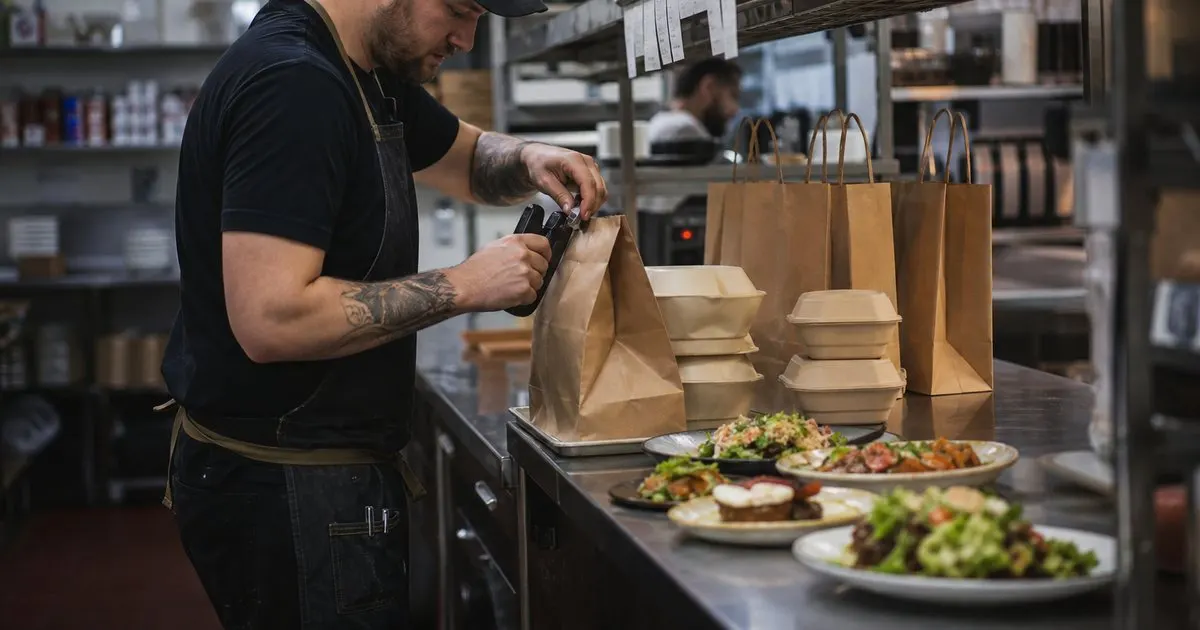
The first structural fix is to stop mixing off-premise tickets into the dine-in flow at the pass. Give them their own printer or display view, their own physical staging area for bags, and if volume justifies it, their own expo or a cook who owns packaging. Off-premise tickets need different information (container type, utensils, sauce on the side, driver name) and different verification (bag contents against the ticket), and combining them with plated tickets at the same pass makes both slower. Related: Who owns the expo pass and how does that role actually work?
Routing rules should also know the difference. A dine-in entree and a takeout entree may cook at the same station, but the takeout version should route with a flag so the cook plates it into a container rather than onto a plate, and so the expo does not try to synchronize it with a table that does not exist. On a display, a distinct color or lane for off-premise tickets is enough. On paper, a different ticket color or a stamp works. The point is that nobody on the line should have to read the whole ticket to know which kind it is. Related: How do you route kitchen tickets to the right stations without chaos?
Sequence them, do not let them jump the line
Off-premise tickets should be sequenced into station queues by the expo like any other work, not fired the moment they print. The rule most kitchens settle on is that a delivery ticket takes its place in the station queue at the time it arrives, with its promise time visible, and the expo fires it when the station has capacity, adjusting the promise if needed. What the expo should not do is let a delivery ticket that printed thirty seconds ago push in front of a dine-in table that has been waiting four minutes because a driver is standing at the counter.
This requires the expo to see promise times and station load together. If the display shows a delivery ticket due in eight minutes and the fry station is at ten, the expo either extends the promise time on the ordering side, if the platform allows it, or pulls a dine-in fire forward and slots the delivery behind it. Doing this by feel at the pass is possible but exhausting. Pacing logic that treats off-premise tickets as a station load input with a deadline, the way PlatePassr does, keeps the sequencing honest without the expo carrying it in their head.
Cap the intake when the line cannot absorb it
Sometimes the correct answer is fewer tickets. Most ordering platforms let a restaurant pause intake, extend quoted times, or limit menu items during a rush. A chef who watches the fry station drown every Friday at seven and never touches the intake settings is choosing the problem. Set a throttle rule before service: at a certain number of open off-premise tickets, or a certain fry station queue depth, extend the quoted time; at a higher threshold, pause new orders for a short window. Write the thresholds down so whoever is running the pass can act on them.
Then look at the delivery menu itself. If delivery leans entirely on the station that is also busiest for dine-in, rebalance it: move a few items to stations with slack, or remove the two items that take the longest and ship the worst. A delivery menu that is a subset of the dine-in menu, chosen for what the line can absorb at peak, is what keeps both channels working. The restaurants that struggle most are usually running the full menu across every channel with no throttle, and then blaming the cooks.
- Off-premise tickets skip courses, arrive in bursts, and pile onto one or two stations, which is why they hurt out of proportion to their count.
- Give them a separate lane at the pass, a distinct flag on the ticket, and their own packaging area.
- Sequence them into station queues by promise time and load; do not let a fresh delivery ticket jump a waiting table.
- Set written throttle thresholds and trim the delivery menu to what the line can absorb at peak.

Julien Jimenez
Julien Jimenez is an independent software builder based in Paris. He designs, ships, and operates focused SaaS products for small businesses and independent professionals. Read the full author page.
Send Every Ticket to the Right Station
Kitchen expo ticket routing and course pacing. PlatePassr is built to help you put this into practice.
Start free trialMore from the PlatePassr blog
How do you route kitchen tickets to the right stations without chaos?
What is the best way to pace courses so a table eats together?
Why does the expo pass fall apart during a busy dinner rush?
Get the PlatePassr playbook
Practical guides on kitchen expo and service, straight to your inbox as we publish them. No spam, unsubscribe any time.