What is the best way to keep hot food from dying in the window before runners arrive?
The plate was perfect at the pass and lukewarm at the table. Here is how to close the gap between the window and the guest with runner staging, hands calls, and honest window limits.
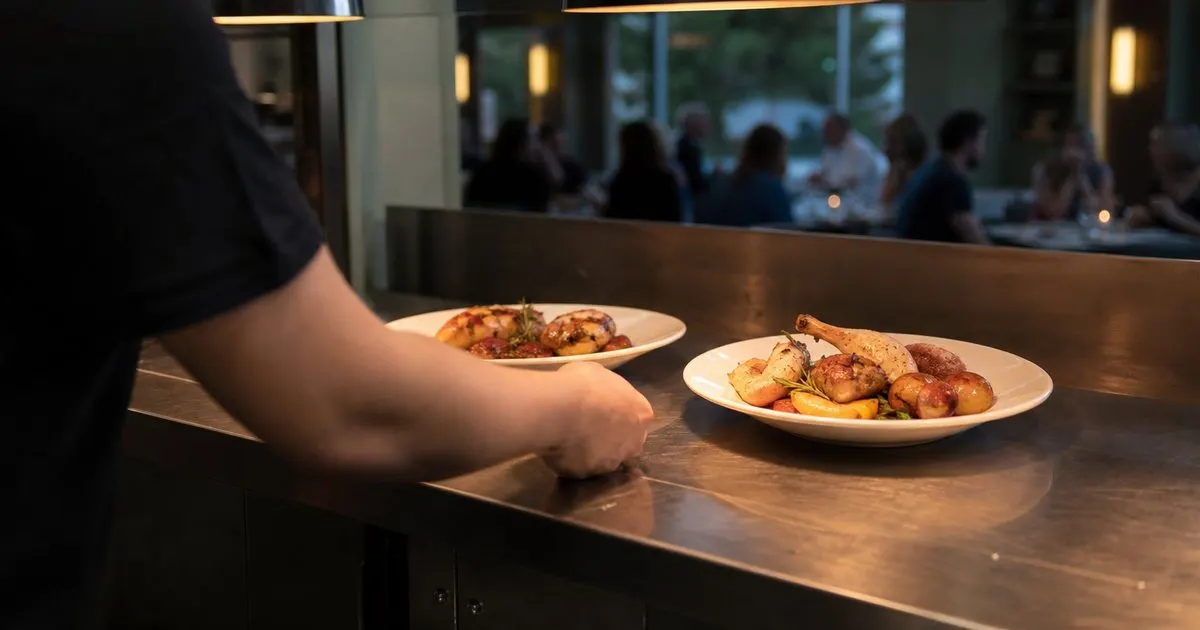
The window is the most expensive place for a plate to wait
A plate that sits in the window is losing quality faster than at any other point in its life. Sauces skin, crisp things soften, proteins carry over past temperature, and the cold components on the plate warm up. Heat lamps slow some of this and accelerate the rest. Two minutes in the window can undo twelve minutes of cooking, and the cook never sees it because the plate looked right when it went up. The guest sees it, and blames the kitchen.
The cause is almost never that the kitchen cooked too fast. It is that the food and the person who carries it were not synchronized. The expo fired the table based on station timing, the plates landed, and the runner was in the dining room clearing a table or delivering another order. The fix is not to cook slower. It is to treat the runner as one more station with its own lead time, and to build the hands call into the fire sequence rather than shouting it when the plates are already sweating. Related: What is the best way to pace courses so a table eats together?
Keep reading: How do you route kitchen tickets to the right stations without chaos?, What is the best way to pace courses so a table eats together?, Why does the expo pass fall apart during a busy dinner rush?. See how PlatePassr helps you kitchen expo ticket routing and course pacing.
Call hands before the plate lands, not after
The single most effective change is to call for hands when the last plate on a table is about a minute out, not when it is up. "Hands in one, table fourteen, four plates" gives a runner time to finish what they are doing and be at the pass when the plates land. The expo can make this call because they know the station lead times: if grill is the last plate and grill is at ninety seconds, hands gets called now. It feels early to expos who are used to calling hands when the window is full, and it is exactly the right time. Related: Who owns the expo pass and how does that role actually work?
For this to work, the runner needs to hear it. In a noisy kitchen, the hands call is the one most likely to be missed because runners spend half their time in the dining room. Some kitchens use a light or a pager at the pass; some post a runner at the window during the peak; some route a hands notification to a handheld. Whatever the mechanism, the test is simple: when the expo calls hands in one, does a runner appear within a minute? If not, the mechanism is not working and the plates will die no matter how well the kitchen cooks. Related: Why does the expo pass fall apart during a busy dinner rush?
Set an honest window limit and hold upstream instead
Every kitchen should know its window limit: the longest a plate can sit under the lamp before the expo would rather not send it. For most hot plates it is a couple of minutes at most, shorter for anything fried or sauced. Once the limit is known, the expo's job is to make sure plates never reach it, and the tool for that is holding upstream. If runners are backed up, the expo holds the fire for the next table rather than letting it land in a window that already has three tables waiting. A held ticket at the station costs a minute of delay. A dead plate costs a remake.
This is the same logic as pacing between stations, applied to the last station on the line, which is the runner. When the expo can see that runners are not keeping up, the right move is to slow the fires briefly, clear the window, and resume. Kitchens that never do this end up with a window full of dying food and cooks who are being told to hurry while their finished plates sit. If your pacing system treats runner availability as a factor in the fire decision, it can do this automatically; if not, the expo has to watch the window and make the call. Related: How do you route kitchen tickets to the right stations without chaos?
Stage the runner side of the pass
The runner side of the pass deserves the same attention as the cook side. Runners need a clear place to stand that does not block the expo, a tray or hand-carry plan that matches the table size, and a way to read the seat numbers without asking. Plates should be set in the window in seat order, left to right, so the runner can pick them up and deliver them without shuffling at the table. A runner who has to ask which one is seat two at the pass is spending window time on a question the expo should have already answered by placement.
During the peak, one runner dedicated to the window is often worth more than two runners who are also bussing. Bussing can wait. Hot food cannot. If staffing does not allow a dedicated runner, agree in pre-shift on who drops what they are doing when hands is called, so the response is automatic. Then measure the window time, the gap between the last plate landing and the plates leaving, for a few services. If it is regularly over your limit, the fix is on the runner side of the pass, not in the kitchen.
- Time in the window costs more quality per minute than any other stage of the plate's life.
- Call hands about a minute before the last plate lands, based on station lead time, not when the window is full.
- Know your window limit and hold fires upstream when runners fall behind rather than letting plates die.
- Stage the runner side: seat-ordered placement, a clear standing spot, and a dedicated runner at peak.

Julien Jimenez
Julien Jimenez is an independent software builder based in Paris. He designs, ships, and operates focused SaaS products for small businesses and independent professionals. Read the full author page.
Send Every Ticket to the Right Station
Kitchen expo ticket routing and course pacing. PlatePassr is built to help you put this into practice.
Start free trialMore from the PlatePassr blog
How do you route kitchen tickets to the right stations without chaos?
What is the best way to pace courses so a table eats together?
Why does the expo pass fall apart during a busy dinner rush?
Get the PlatePassr playbook
Practical guides on kitchen expo and service, straight to your inbox as we publish them. No spam, unsubscribe any time.