When should a small restaurant move from paper tickets to a kitchen display system?
Paper works until it does not. Here are the honest signs that a display will help, the signs it will not, and what to expect in the first month.
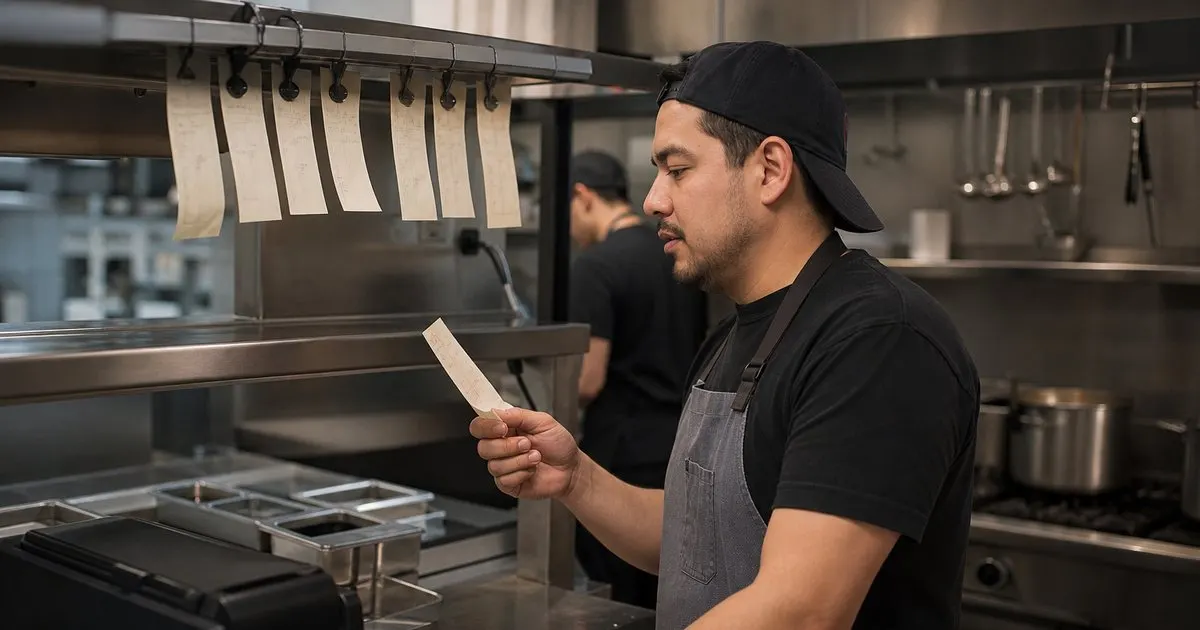
Paper is not the problem until it is
Plenty of excellent kitchens run on paper. A printer, a rail, and an expo who can read a stack are enough for a single-station line or a small line where the expo can see every cook. Paper is cheap, it never freezes, and every cook already knows how to read it. Moving to a display because it seems modern is a bad reason, and kitchens that do it without a specific problem to solve usually end up with an expensive screen showing the same information the rail did.
The question to ask is not whether to upgrade but what paper is failing at right now. If the answer is nothing, keep the paper. If the answer is one of a handful of specific failures, the display is likely worth it. The failures worth looking for are tickets getting lost or misrouted, the expo losing track of what is working across stations, timing that nobody can measure, and a menu with enough modifiers that the paper ticket has become hard to read. Each of those has a paper fix that works up to a point, and a display fix that works past it. Related: What is the best way to pace courses so a table eats together?
Keep reading: How do you route kitchen tickets to the right stations without chaos?, What is the best way to pace courses so a table eats together?, Why does the expo pass fall apart during a busy dinner rush?. See how PlatePassr helps you kitchen expo ticket routing and course pacing.
The signs a display will actually help
The clearest sign is routing complexity. Once a menu has items that need to reach two or three stations, and the line has more than two or three stations, paper starts requiring multiple printers and duplicate tickets, and the expo starts reconciling copies by hand. A display routes by rule, shows the expo every station's queue on one screen, and marks the item done the moment the station bumps it. Kitchens at this point usually describe the switch as going from yelling across the line to looking at the screen.
The second sign is that nobody can answer how long the grill takes on a Saturday with a number. If timing arguments happen after every bad service and nobody has data, the display's fire and bump timestamps end the argument. The third sign is a lost ticket problem that the usual paper fixes have not solved: printer checks, rail discipline, reprints. If tickets still go missing after those, the failure is structural and paper will not fix it. The fourth is high modifier volume, where a display can show modifiers in color and size that a plain thermal chit cannot, and can put them where the cook looks first more reliably than a printer template. Related: When should the expediter fire the entrees for a large party?
The signs it will not help, or will hurt
A display will not fix an expo who does not own the pass, a line that ignores fire calls, or a menu that is too big for the stations that cook it. Those are process problems, and a screen makes them more visible without making them better. It also will not help a kitchen where nobody will own the configuration. Routing rules, station layouts, and menu mapping need an owner who updates them when the menu changes. A display with a stale routing map loses tickets as reliably as a jammed printer. Related: How do you route kitchen tickets to the right stations without chaos?
Be honest about the physical kitchen too. A display needs a mounting position each cook can see from their plating spot, power and network at each station, and a bump bar that survives heat, grease, and wet hands. A cramped line with nowhere to mount a screen at eye level may be better served by a single expo display plus paper at the stations. And a kitchen with unreliable internet should ask how the system behaves when the connection drops, because a display that goes dark mid-service is worse than any printer. Related: Why does the expo pass fall apart during a busy dinner rush?
What the first month looks like
Expect the first week to be slower. Cooks will look for the rail, the expo will read the screen more slowly than they read paper, and the bump habit will be inconsistent. Run paper and display in parallel for a few services if the system allows it, so a display problem does not stop service. Configure routing conservatively at first: one item to one station, with the expo handling anything unusual verbally, and add multi-station routing once the basics are steady. Put bump discipline in every pre-shift for the first two weeks.
By the end of the month, the things that should have improved are specific: fewer lost tickets, an expo who can see all stations at once, and timing data you can actually read. If those did not improve, the problem was never paper. The honest version of this advice from a company that sells display software is that the display is a multiplier on a kitchen that already has an expo and fire discipline. PlatePassr and tools like it make a good line easier to run. They do not make a disorganized line organized, and we would rather tell you that now than after you have bought screens.
- Keep paper until it fails at something specific: routing, visibility, timing data, or lost tickets.
- Routing complexity across three or more stations is the clearest sign a display will help.
- A display will not fix a missing expo, ignored fire calls, or a routing map nobody owns.
- Plan for a slower first week, parallel paper if possible, conservative routing, and bump training.

Julien Jimenez
Julien Jimenez is an independent software builder based in Paris. He designs, ships, and operates focused SaaS products for small businesses and independent professionals. Read the full author page.
Send Every Ticket to the Right Station
Kitchen expo ticket routing and course pacing. PlatePassr is built to help you put this into practice.
Start free trialMore from the PlatePassr blog
How do you route kitchen tickets to the right stations without chaos?
What is the best way to pace courses so a table eats together?
Why does the expo pass fall apart during a busy dinner rush?
Get the PlatePassr playbook
Practical guides on kitchen expo and service, straight to your inbox as we publish them. No spam, unsubscribe any time.