How do you handle allergy and modifier tickets at the expo window without slowing the line?
Allergy flags and heavy modifiers are where most expo mistakes happen. Here is how to route, call, and verify them without adding minutes to every ticket.
Why allergy and modifier tickets break normal expo rhythm
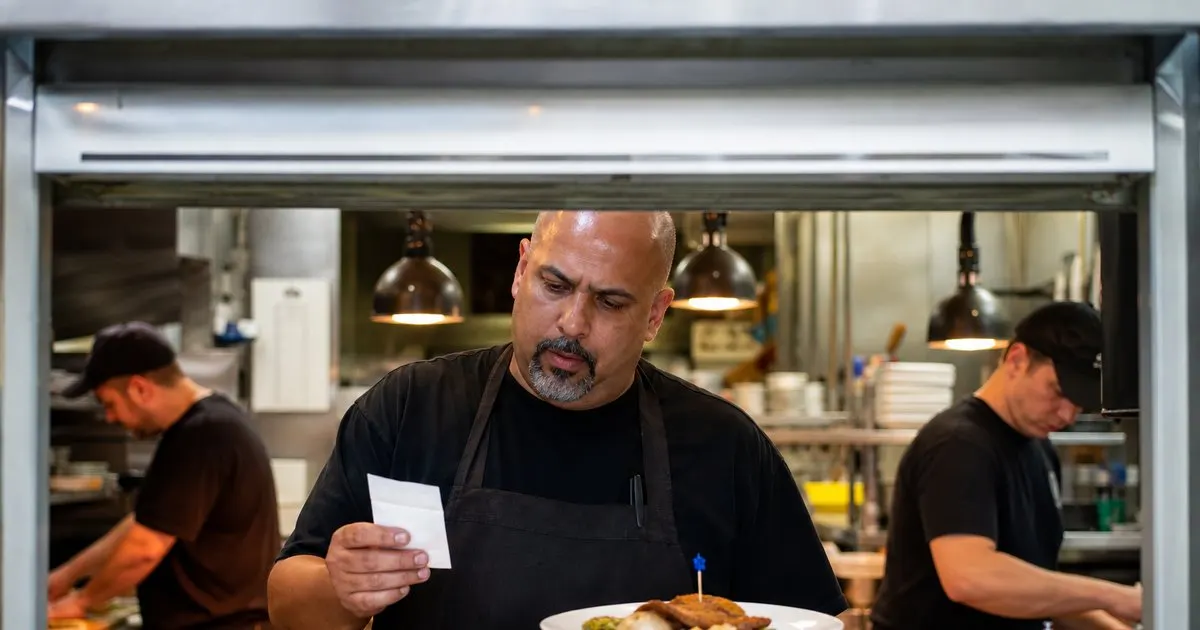
On a clean ticket, the expo's job is timing. On an allergy or heavy modifier ticket, the job becomes verification, and verification is slow when it is improvised. The cook has to read the modifier under a printer that keeps spitting paper, the expo has to remember which plate on the pass carries the flag, and the runner has to know which seat gets it. Each of those handoffs is a chance to lose the information, and the plate looks identical to the standard version, which is exactly the problem. Related: What is the best way to pace courses so a table eats together?
The mistake most kitchens make is treating these tickets as ordinary tickets with an extra line. They are not. An allergy ticket changes the prep surface, the utensils, the fryer oil question, and the order in which the station builds plates. A ticket with four modifiers changes how long the station needs and whether the standard mise en place still applies. If the expo does not adjust the fire time and the call, the station either rushes the special plate or holds the rest of the table hostage.
Keep reading: How do you route kitchen tickets to the right stations without chaos?, What is the best way to pace courses so a table eats together?, Why does the expo pass fall apart during a busy dinner rush?. See how PlatePassr helps you kitchen expo ticket routing and course pacing.
Route the flagged ticket so it is impossible to miss
The first fix is at the printer or display, not at the pass. Allergy and modified items should print or display with the flag at the top of the ticket, not buried after the item name. Many point-of-sale setups let you push a separate allergy ticket to the station and a copy to expo, which is worth doing even though it doubles the paper. A cook who receives a dedicated ticket that says ALLERGY before anything else treats it differently than one who has to spot a lowercase note under the third item. Related: Why does the expo pass fall apart during a busy dinner rush?
On a kitchen display, the same principle applies with color and position. Keep flagged tickets visually distinct and pinned in a consistent place on the station screen so the cook learns to look there first. When routing rules are configurable, send the allergy item to the station that will build it and a notification to the expo at the same time, so the expo knows a verification is coming before the plate lands. This is the kind of routing PlatePassr handles by rule, but a well-configured printer setup can get you most of the way if someone owns the configuration. Related: Who owns the expo pass and how does that role actually work?
Call it, mark it, and verify it out loud
The expo should call flagged tickets differently from standard ones. Call the allergy first, then the item, then the modifier, then the seat: "Allergy, shellfish, the risotto, no parm, seat two." The station repeats it back. That echo is not theater. It is the moment the cook confirms they heard the flag rather than the dish name. On a ticket with a long modifier list, the expo should call the modifiers that change the build and skip the ones that are cosmetic, because a callout that runs twenty seconds gets tuned out.
Physical marking on the plate closes the loop. A distinct ring, a colored pick, a different plate shape, or a plate carried separately by the expo instead of stacked on a tray all work, as long as the whole house uses the same convention. When the plate hits the pass, the expo reads the ticket against the plate, says the seat number to the runner, and watches the runner acknowledge. Verification is three short steps repeated the same way every time, which is faster than a careful check that happens differently on every ticket.
Protect the timing of the rest of the table
Flagged tickets typically take longer, and the expo should plan for that rather than react to it. If the modified item lives on the slowest station, fire it first or give that station a head start by a minute or two, then fire the rest of the table normally. The goal is that the special plate arrives at the pass at the same moment as the standard plates, not that everyone waits at the window while it finishes. A good expo reads the ticket at the moment it prints and decides then where the extra time will come from.
Track how often flagged tickets are the reason a table goes long. If the answer is most of the time, the problem is usually upstream: the modifier is not routing to the right station, the station has no separate prep for the common allergy swap, or the expo is finding out about the flag at the pass instead of at the printer. Fix the routing and the prep and the timing problem mostly disappears. Fixing the expo's speed without fixing the information flow just moves the error to a different point in the line. Related: How do you route kitchen tickets to the right stations without chaos?
- Flagged tickets are verification tasks, not timing tasks, and they need their own call pattern.
- Put the allergy flag at the top of the ticket and route a copy to expo so no one discovers it at the pass.
- Call the flag first, get a repeat-back, and mark the plate physically with one house-wide convention.
- Give the slow station a head start so the special plate lands with the rest of the table instead of after it.

Julien Jimenez
Julien Jimenez is an independent software builder based in Paris. He designs, ships, and operates focused SaaS products for small businesses and independent professionals. Read the full author page.
Send Every Ticket to the Right Station
Kitchen expo ticket routing and course pacing. PlatePassr is built to help you put this into practice.
Start free trialMore from the PlatePassr blog
How do you route kitchen tickets to the right stations without chaos?
What is the best way to pace courses so a table eats together?
Why does the expo pass fall apart during a busy dinner rush?
Get the PlatePassr playbook
Practical guides on kitchen expo and service, straight to your inbox as we publish them. No spam, unsubscribe any time.